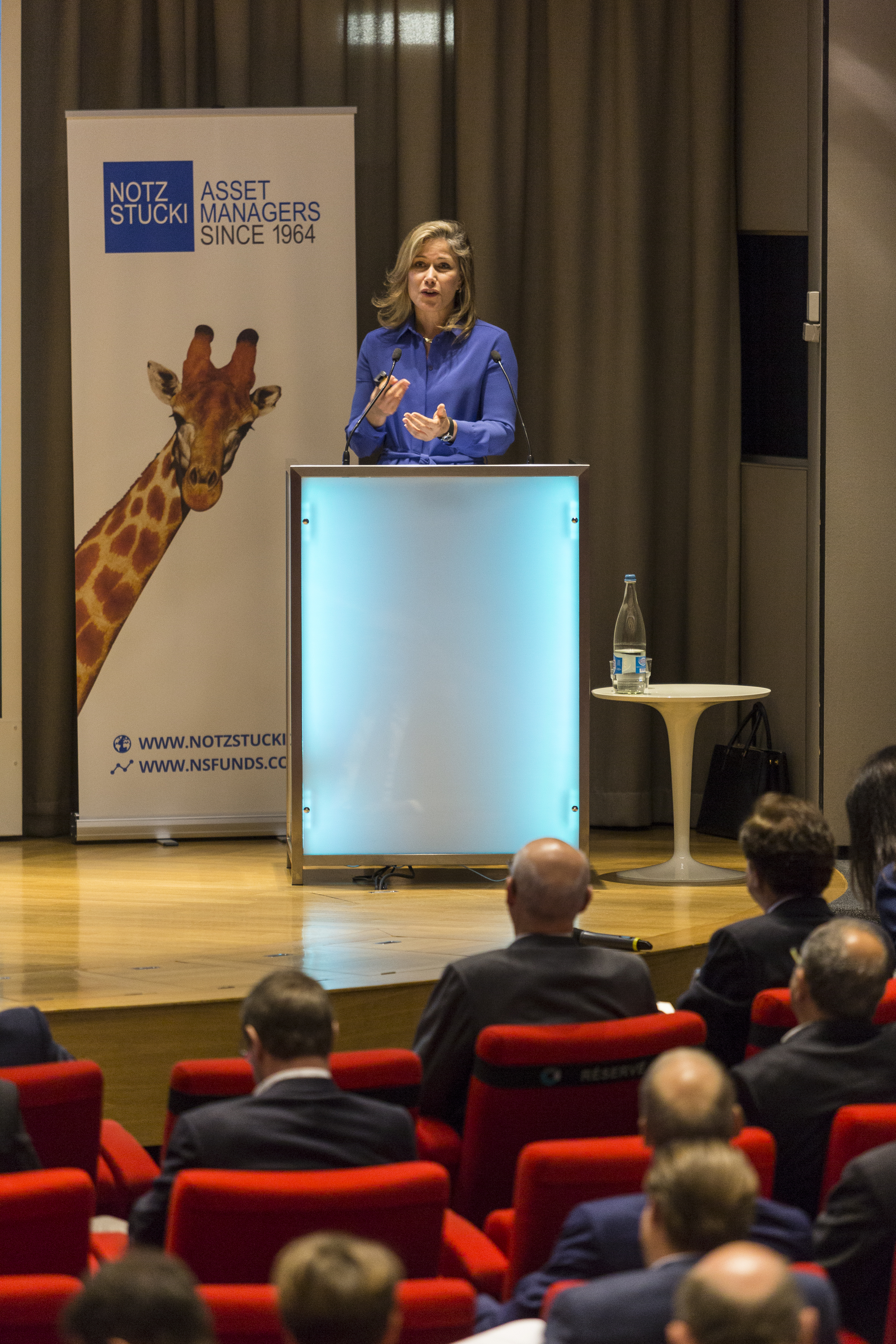
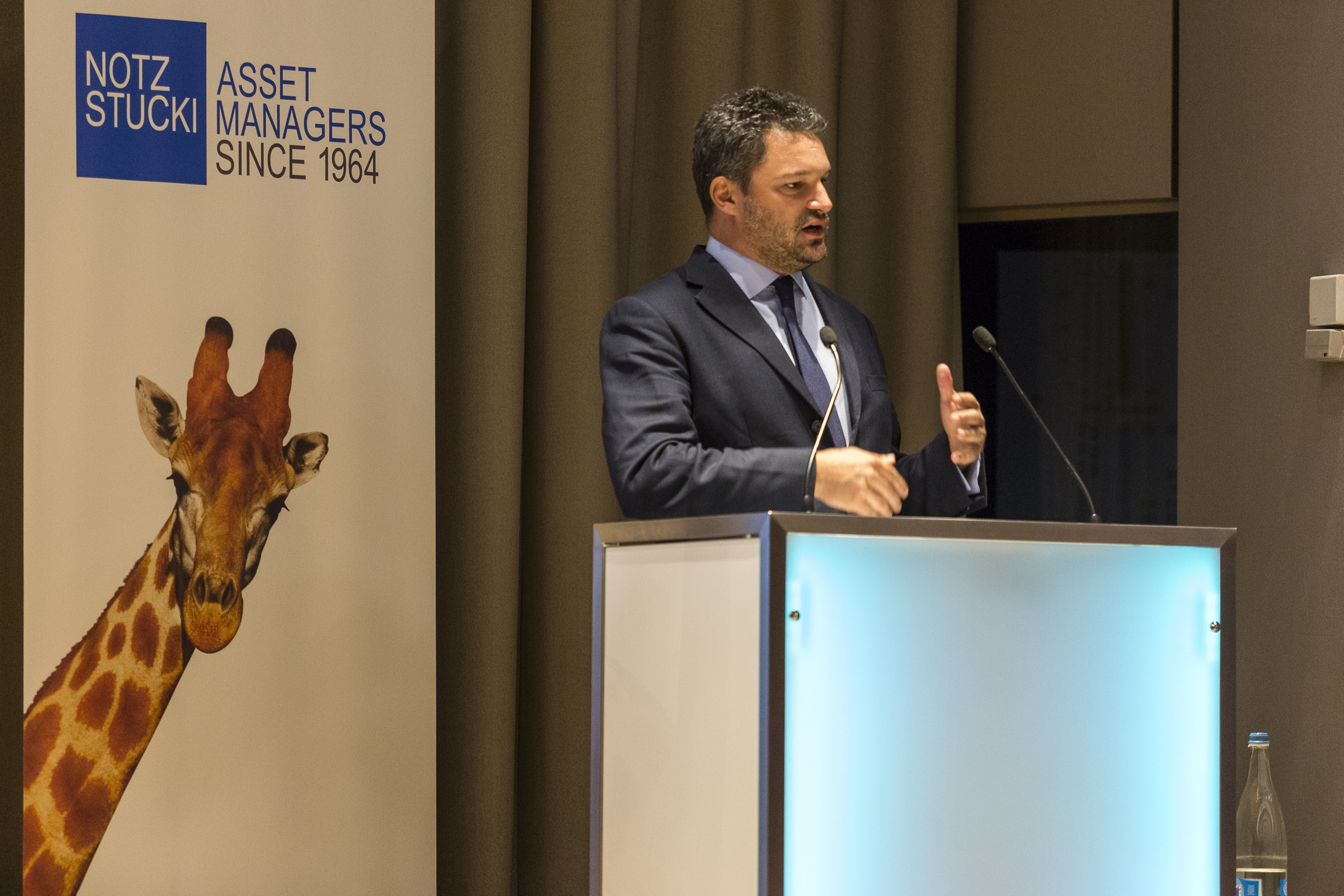
Notz Stucki has just released its investment outlook for the third quarter of 2017.
“The reduction of interest rates below their natural levels has poisoned the river at its source, and nobody knows whether the water is fit to drink.” Jonathan Ruffer
The markets performed well in the second quarter propelled by the reassuring election result in France which drew a line under the populist victories in the major elections last year.
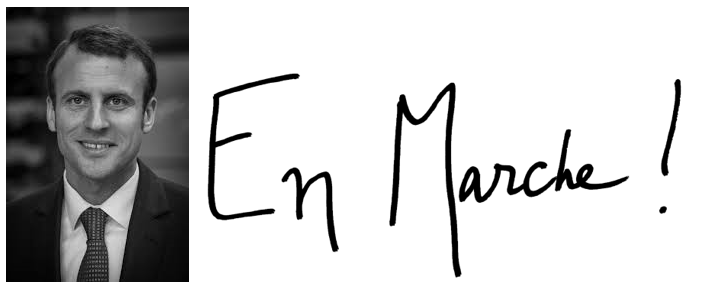
Emmanuel Macron, 25th President of the French Republic
As the year has progressed the shocks of Brexit and the Trump victory have been digested, and there is more clarity on what they may signify. Ironically after four decades of being a difficult member of the EU Britain may become a better European state when it leaves, being forced to accept compromises. The Brexit negotiations are likely to offer more noise than light in the next year, the process has been likened to negotiating a divorce with 27 spouses simultaneously, but despite the nationalist rhetoric both sides are incentivised to come to a sensible agreement, and Mrs May’s disastrous election campaign has weakened the hand of the hard Brexit camp. Meanwhile the more one watches the Trump administration the more it seems that the Barbarians are in the Castle. Mr Trump’s unpredictability and lack of Washington experience has affected his ability to push his reforms through. Thus far the anglo-saxon world has seemed powerless to translate the visceral voter anger into legislation.
As politics becomes less of a concern investors can worry again about QE-fattened markets…
Please click here to download the entire document.
So far this year the optimists have been proven right, as stock markets have advanced steadily. This is supported by evidence that the world economy is in better shape, and is in a more predictable and sustainable condition than it has been for ten years. While this has been increasingly evident in economic statistics over the past year it has been overshadowed by political turmoil, particularly Brexit and Trump’s election, which could have had a serious impact on world growth if it had been followed by similar results in Europe’s elections this year. The Dutch and French elections conclusively rejected the populist surge, and now financial markets have a reassuring combination of stable economic growth and political calm. Where are the best opportunities to take advantage of this?
Anatole Kaletsky, Gavekal
It is clear that the US has discounted this brighter outlook the most, largely because their recovery was well ahead of the rest of the world. From 2010 to 2014 the US economic expansion was driven by QE. However, since that ended interest rates have been rising slowly, yet the economy has still maintained modest growth. Employment has grown at a rate of two hundred thousand jobs a month with the odd soft patch, and US private sector GDP has been growing 3% p.a. since 2010. There was a danger that Trump’s election would bring a Reaganomics style economic boom which with employment already full could have caused inflation to take off. However, the Trump Administration has become paralysed through some self-inflicted actions, and as it collided with the Congressional process. As a result it seems that it will get little of its agenda through. This is disappointing for cyclical assets, but to the extent that it puts less pressure to raise interest rates and a higher dollar it is helpful for most other assets. From here the US economy should follow a slow self-sustaining expansion. Nonetheless the stock market has largely discounted this story, and as interest rates rise and monetary support is gradually withdrawn the headwinds will build making further advances of the index more difficult. Moreover the US stock market has become very narrow with just a few stocks pushing the index up, which is a sign that the market is not healthy. These market leaders are all technology companies and their profitability is based on monopolistic practices. History has shown at some point these monopolies get broken, or at least reined in. The US bull market is looking mature, and it is worth highlighting that the last four years global stock market performance has been carried almost entirely by the US. Since 2013 the US has surged ahead while the rest of the world’s markets have been almost flat when measured in US dollars (they have done better in local currencies). It looks to be a good time to start to rotate assets elsewhere.
Europe appears the most attractive alternative. The threat of the break-up of the Eurozone has gone, and Europe is reporting much better data, with even Italy improving and Greek debt recently upgraded. The shift in politics from six months ago has been dramatic and this takes away the risk premium that, quite rationally, had been there before. The genuine concern about a political nightmare that Draghi would not have been able to solve has disappeared. Furthermore the ECB continues to pump gargantuan quantities of liquidity into the system; €85bn a month or the equivalent of 200% of net sovereign issuance.
Anatole Kaletsky, Gavekal
The other concern of investors last year, which was the collapse of China’s growth, is also receding. It is clear that China is slowing but if the rate of slowdown is held at 0.5% that still represents considerable economic growth given the large base effect. The concern on China is rather the lack of reform that has taken place, the build-up of debt levels, the signs of increased central planning and poor corporate governance. By virtue of its size these concerns mean that China has become a potential source of instability. When China sneezes the world will catch pneumonia, but that day is a year or two away.
The tremendous positive factor in the world today is the oil price. The fall of the oil price from over $100 to under $50 represents a transfer of two trillion dollars from producers to consumers. This is underwriting the recovery around the world as it releases consumers spending power and allows for more debt repayment. It has the effect of a giant tax cut.
As the global picture becomes one of steady growth everywhere bonds look more and more overvalued, particularly in the US. Policy has been unprecedentedly stimulative, for example in the US real rates have been negative for ten years. The expectation must be that US bond yields will drift higher. However, in Europe and Japan bond yields will probably stay low despite the recovery of their economies because their Central Banks are determined to keep monetary policy loose. The same does not apply to their currencies. The dollar looks extremely overvalued, arguably as overvalued as it has been in the last fifty years, with the exception of the brief peak in the mid 1980’s driven by Reaganomics. The euro looks correspondingly undervalued and but for the expectation of interest rates rising the euro would probably be climbing against the dollar now. But Fed tightening will not be enough to hold the dollar at its current levels. As Europe recovers the euro should recover with it over the next few years.
World growth is solid, and is supported now with a much more constructive political environment. The US has largely discounted this situation but the road map for the rest of the world is one that should follow the US with a lag. Japan is probably about three years behind the US and Europe maybe five years behind. This gives plenty of opportunity for equities in these countries to catch up over the next several years as growth comes through. Care needs to be taken as there are areas of the market that exhibit a high element of speculation; a number of companies are selling on high multiples while their growth is nothing special, and overall equities are not cheap except when compared to very expensive bond markets. However, the better environment in Europe should bolster returns there, though it should be noted that the returns are likely to derive as much from currency gains as stock appreciation.
Notz Stucki Investment Meeting – Notes 11 04 2017
Over the past year world economic growth has been stronger than expected, for several reasons. First China’s growth has been solid. Instead of imploding the industrial side of the economy bounced back in 2016 in response to the policy measures of a year ago. Growth in China may fade a bit this year as the stimulus wears off, but it won’t collapse. Second the Brexit shock turned out to be a damp squib. Aside from sterling’s fall it affected little, though it underlined Central Banks’ determination to underwrite the system in response to any shock. Third Trump’s election led to a surprising rally in risk assets on hopes of a reflation. There are signs now that this rally is fizzling out as Mr Trump is running into the usual Washington impasse. Meanwhile the Eurozone appears to be bottoming out and growth rates are improving. Even the southern countries are doing better. The Germans are realising that some inflation is needed, and if German wage growth outpaces wage growth of the Mediterranean countries then the long-hoped for rebalancing will be underway.
While economic growth is better, the outlook for asset markets is more complicated. Equity markets have discounted the recovery, and have been further puffed up by governments’ monetary policy. Low interest rates didn’t trigger new investment, it just raised asset prices. The rate of growth of US productivity, a vital component of growth, has been falling since 2005 as business investment has been meagre, and creative destruction didn’t happen. At the time of the crisis in 2008/09 western governments were already carrying too much debt so fiscal stimulus was unpalatable, and they had little choice but to cut interest rates and adopt quantitative easing. The resulting asset price rises did nothing for productivity. Structurally companies face more problems than in the past. The companies that should have been allowed to fail in the crisis have continued, and these zombie companies have prevented the stronger companies from taking market share. Regulation is more complex. The tax code is fiendishly complicated. All these factors favour the big company over the small start-up who faces much greater obstacles than in the past, and the steadily declining productivity growth may point to the economy being less dynamic today. In this context Trump’s promise to cut taxes and regulation are clear positives, but his cronyism (e.g. appointments of family members) and his threats of protectionism are likely to weigh on productivity.
An important question will be how the US dollar behaves. It is strong already and Trump seems to want it lower. On the other hand the Fed is in tightening mode and the trade balance is starting to improve which will support it. On balance the dollar is unlikely to go much higher, and will probably weaken somewhat. Traditionally a weaker dollar is good for Emerging Markets as it allows them to loosen their liquidity. The more problematic question is who will fund the US fiscal deficit. The Fed is trying to reduce its balance sheet. The best outcome would be the consumer saving more, but Trump wants to boost consumption through tax cuts. Foreigners can usually be relied on to plug the gap but with shrinking trade deficits they have fewer dollars to invest. The fracking revolution may help on this score as the American energy sector is the most dynamic in the world, and is creating energy surpluses and jobs in the US.
China remains a conundrum for investors. Western observers worry about the debt – both the scale of it, and its alarming rate of increase. But with capital controls this is less of a problem, and there is no obvious trigger for the debt to undermine the system. For twenty five years investors have expected the Japanese bond market to blow up. Chinese debt is matched by the deposits in the banking system, but as the debt expands it will be supported by interbank funding, and as this requires more confidence in counterparties it can be more flighty. It is also likely that China’s growth will slow slightly. Slower growth and lower inflation, similar to the Japanese model, will make Chinese bonds an attractive asset. The risk is the currency but China is determined to make the renminbi the deutschemark of Asia so Gavekal see little risk of a devaluation.
If the bull market continues then investors need to start to look outside the US. European and Asian markets represent better value, and sectors like defence and financials should be favoured in equities generally, and Asian consumption and Indian financials in particular. In currencies sterling stands out as good value, and the Brexit negotiations may be smoother than the market fears. Finally after several years of lacklustre performance there is increasing evidence that stock picking is starting to work again, possibly because, with markets at expensive levels, relative valuations are more interesting than the momentum investing that has dominated recently.
Pierre Mouton: UK Equity Market Is Wide And Deep
Bloomberg — Despite Article 50 being triggered, Pierre Mouton, Head of Long-Only Strategies at NS Partners, sees significant opportunities in the UK equity market. Speaking on Bloomberg Daybreak Europe with Caroline Hepker and Markus Karlsson, he also expressed confidence that financials will recover across Europe — a development that would mark a welcome shift for investors.
In this interview, Pierre Mouton covers three key themes:
UK equity market opportunities despite Brexit uncertainty triggered by Article 50
European financials recovery and what it means for portfolio positioning
Long-only investment strategies in a shifting macro environment
This is a Bloomberg podcast. To download, watch or listen to the full report, click here.
A (deep) contrarian view #2: Buy Sterling Pound Vs. Us Dollar
BUY STERLING POUND VS. US DOLLAR
CURRENT SITUATION
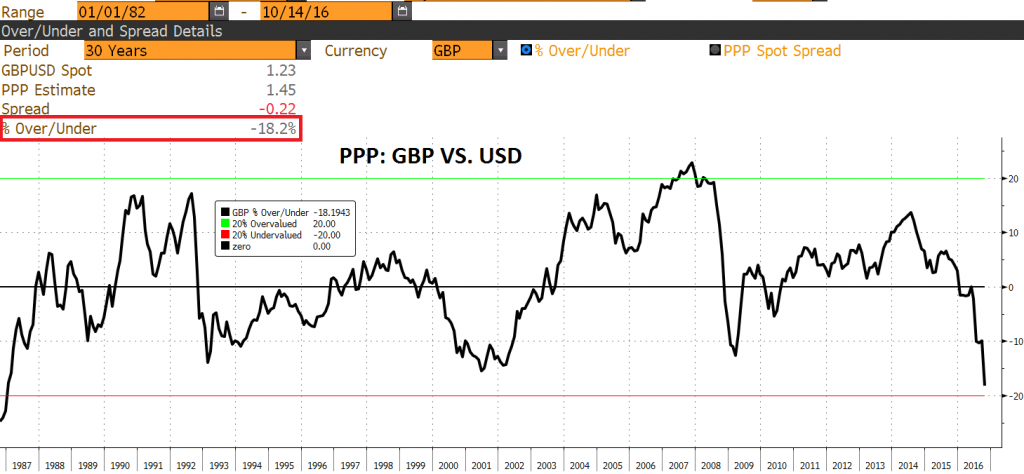
On June 23rd, UK citizens voted to leave the European Union (Brexit). The GBPUSD rate was 1.481 before the referendum. Two days later GBP had fallen 10.8% to 1.321. After that date, the currency has been more or less stable until October 2nd, when the new UK Prime Minister Theresa May announced that by March 2017, the UK would invoked the famous Article 50 to leave the EU. Being consistent with the message “Brexit means Brexit”, Mr. May gave a message that was perceived as a “hard Brexit”, meaning that UK wanted to control immigration and its destiny as a country. This message might indicate a tough negotiation process with the EU, which caused a further fall in the GBP to today’s level of 1.220, the lowest level since 1985 and 17.6% lower than the rate before the vote.
One of the contributors to this fall is the UK high currency account deficit of 5.7% in 2016. Consensus expect 4.4% in 2017 and 3.0% in 2018. This high numbers tend to be a drag to the country currency. Nevertheless, it is more important to know that the Net International Investment Position (NIIP) was only -6.7% as of 1Q16. Furthermore, as 60% of UK liabilities are denominated in foreign currencies and 90% of the assets, the NIIP might be positive as of today (Figures taken from the Bank of England report published in July16)
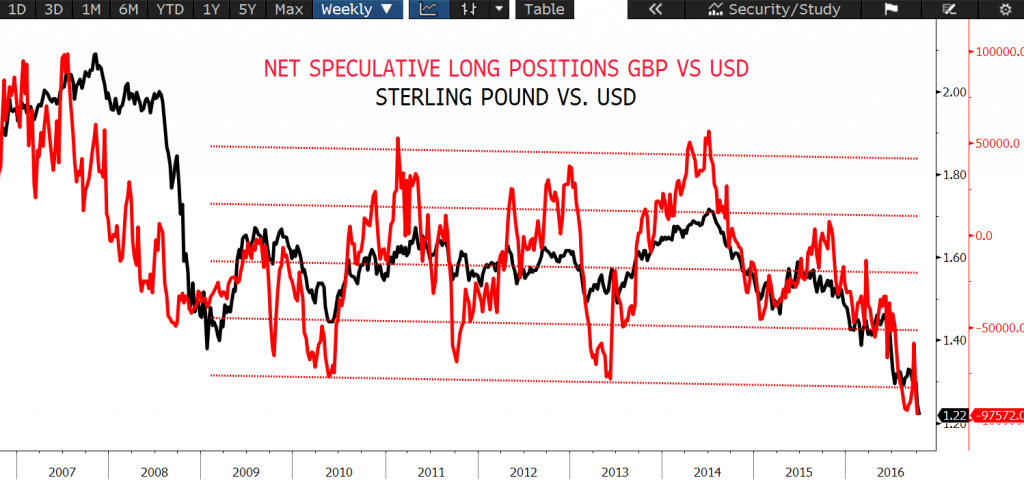
NET SPECULATIVE POSITIONS
The chart above shows the net speculative positions in the GBPUSD futures market (red line). This measure tends to be a very good CONTRARIAN indicator when the positions are very extreme, and we have reached this week a 2 standard deviation reading, which in the past has been a good short-term trading indicator. Interesting to remember the famous Buffett sentence: “Be fearful when others are greedy and greedy when others are fearful”.
Source: Bloomberg and Notz Stucki.
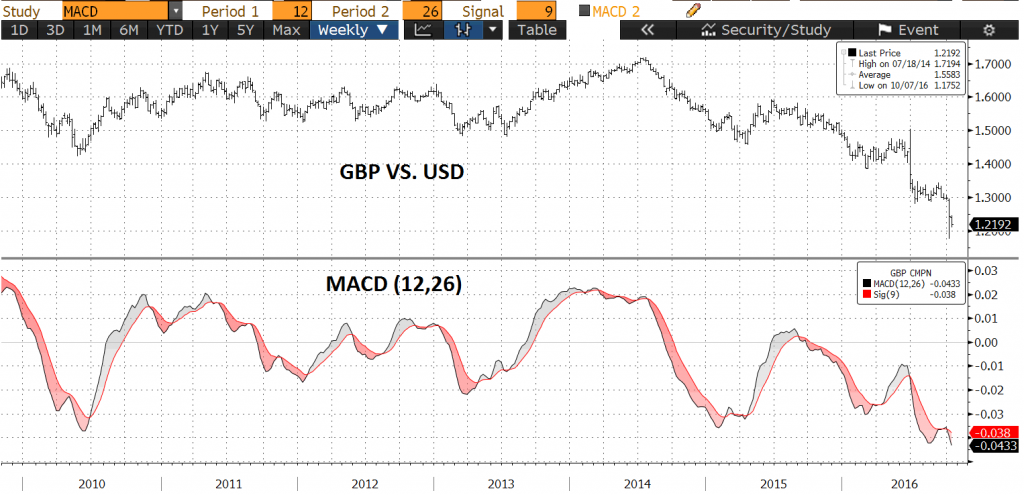
TECHNICAL OSCILLATORS – MACD
From the technical point of view, the most widely used oscillators (RSI, MACD, etc) are telling us also that the GBP is oversold. The chart below shows just the MACD which is at levels that reflect an extreme oversold situation, and so a good contrarian indicator
Source: Bloomberg and Notz Stucki.
PURCHASING POWER PARITY (PPP)
PPP is not a good indicator on a short-term basis, as currencies can remain overvalued or undervalued for a long time, but it gives a reasonable indication of long-term value. It is better to trade with a positive tailwind behind us. The chart below shows that the GBP is trading at the lowest level on a PPP basis since 1986, and again, 2 standard deviations below the average (we took this idea/graph from Charles Gave on a note to investors sent on October 11th).
Source: Bloomberg and Notz Stucki.
RECOMMENDATION
There is a clear political risk and uncertainty in the UK after the Brexit, and there is also a high current account deficit in the UK, but several indicators point to an overshoot in the value of the GBP. A drop of 17.6% in the currency value of the 6th largest economy in the world (France has overtaken the UK after the recent GBP fall) is more typical of an unbalanced emerging market economy. The United Kingdom is a serious country with solid democratic institutions, with savvy corporate managers, with great universities, with a positive Net International Investment Position today, great human capital, etc, so we may expect at least a short term recovery in the next 3-6 months.
Investment Outlook Q4 2016
Notz Stucki has just released its investment outlook for the last quarter of 2016.
Chart of the Month: Risk is not necessarily where you think it is…
Following the Brexit vote, a Bloomberg article was published on June 27 titled “The USD 100 Trillion Bond Market’s Got Bigger Concern than Brexit”. The same day, and like every Monday morning, the Notz Stucki Team held its weekly investment meeting. While passionate debates over the consequences of Brexit were taking place, one of our macro specialists expressed the view that the biggest threat in the coming months could come from the US and not China or Europe. Risk is not necessarily where you think it is…
Even if newspapers were already comparing Brexit to the Lehman collapse, the FTSE Index ended the month of June up +4.4% and the MSCI World Index slightly down with a return of -1.3%. Global equity markets experienced a volatility spike during the now famous “Black Friday” but the MSCI World Index already reached June 16th levels only 3 days after the vote.
At the other end – supposedly – of the risk spectrum is the world of Government Bonds. This was the place to be invested since the start of the year and for a long time now. If you look at EFFA Indices, US Bonds with maturities above 10 years are up +15.2% YTD as of the end of June, EUR Bonds +14.1%, GBP Bonds +20.1% and CHF Bonds +14.9%. The 30y Swiss Government Bond shows a negative yield of -0.11% as of July 6th. More than USD 10 tn of worldwide debt is now yielding in negative territory.
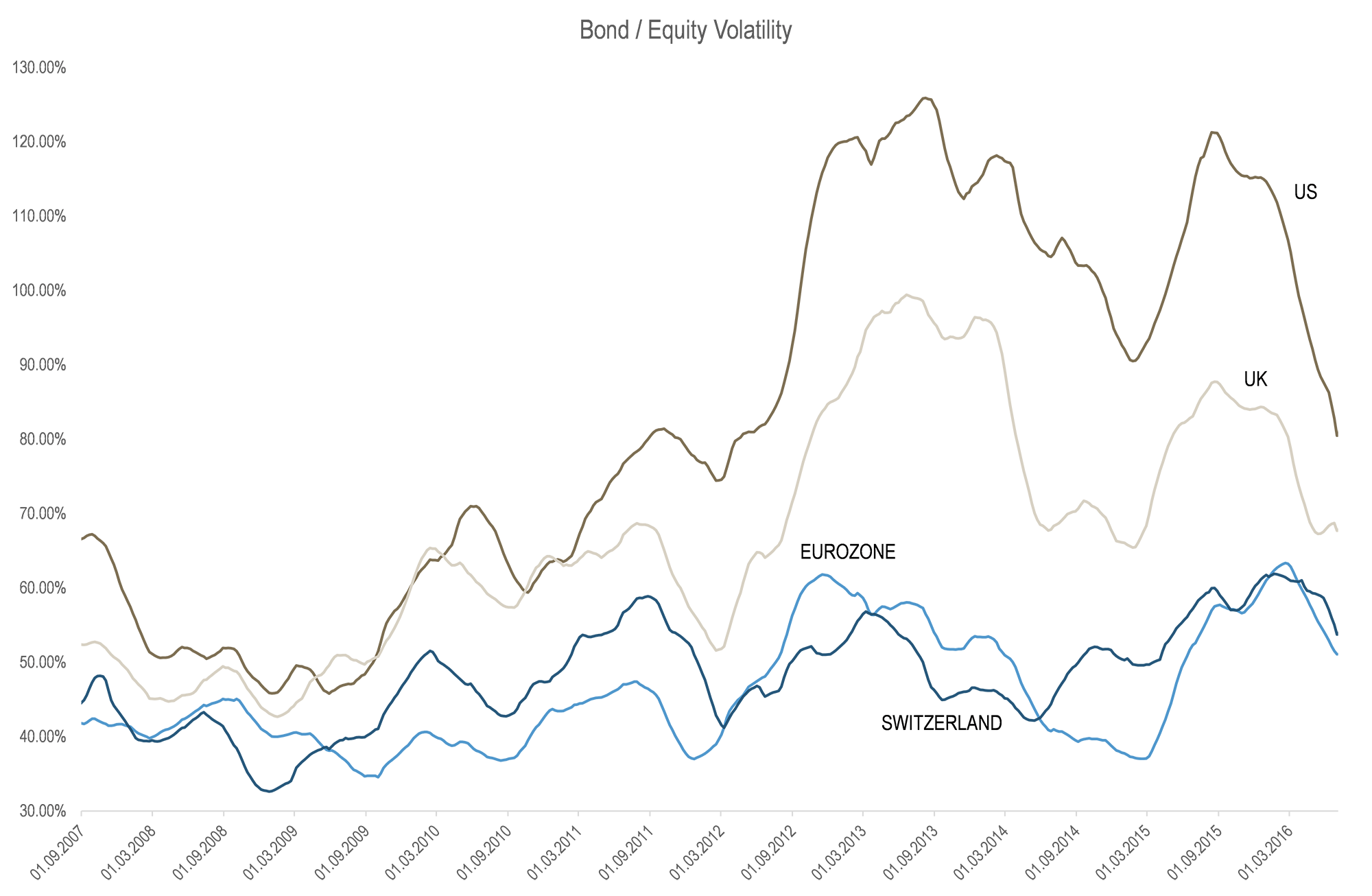
Bond Equity Volatility
Coming back to Brexit and market volatility, the chart displayed above shows the moving average of the ratio of bond volatility to equity volatility for the US, UK, EU and CH markets. Since mid-09 and the start of the equity market rally we can see an increase of bond volatility versus equity volatility. The ratio for EUR and CHF has remained in a range between 0.4 and 0.6, in line with its historical average. However the ratio for UK and US markets has significantly increased during this period. Since mid-2012 the ratio for the US has frequently been above 1, meaning that being invested in the US T-bond market today could potentially be a riskier bet in terms of volatility than having an exposure to the S&P 500 Index.
Notz Stucki June 2016 investment conference in Geneva : notes
On the occasion of its semi-annual Investment Conference in Geneva held June 28th, 2016, Notz Stucki welcomed the following guest speakers:
Louis-Vincent Gave, CEO, GaveKal Ronald Chan, Portfolio Manager, Zeal Asset Management Leda Braga, CEO, and Grégoire Dooms, Product Manager, Systematica Investments Pierre Andurand, CIO & Managing Partner, Andurand Capital
Here are the notes on the conference.
The unexpected result of the UK referendum last Thursday caught markets completely off guard. This was understandable given that all the polls (again) and the bookmakers had predicted a victory for Remain, and markets had been positioning accordingly. As voting closed on Thursday night the leader of UKIP (the UK Independence Party) gave a concession speech. When the result came through for Exit the surprise was total. All equities fell dramatically, sterling fell heavily and peripheral European bonds yields rose. Gold was one of the few financial assets to rise. However gradually the market reaction has become more discriminating and even by the end of Friday some companies share prices were up, mostly those with significant dollar earnings. Indeed the UK FTSE 100 index was slightly up last week. Importantly the markets traded smoothly. There were no flash crashes, or counter party issues. So far, at least, the market plumbing has proved resilient, in marked contrast to the chaos that ensued in 2008 when Lehman collapsed.
The British vote was a surprise but can be viewed as a spectacular piece of democracy in action. The 17.4 million who voted in favour of exit represent the largest block of votes in the country’s history. Ultimately this protest vote has its roots in the 2008 crisis, being a decisive rejection of the advice of the Establishment. The Prime Minister, all living ex-Prime Ministers, 75% of the Members of Parliament, the Bank of England, The Treasury, the IMF, President Obama and many others all counselled a Remain vote with dire warnings of the consequences if the opposite course was followed. The vote was swung by those who have seen little of the recovery since the crisis. Their wages and living standards have been stagnant in contrast to the obscene wealth funnelled on to a few elite. In fact it is rather surprising that it is the UK that has delivered this verdict, being the country in Europe that has enjoyed the strongest growth rate and reasonably strong employment. Clearly a period of great uncertainty now looms for both the UK and Europe as they work out a new accommodation; a difficult task anyway made more challenging by the political vacuum in the UK and Europe’s fragile economic recovery. The vote threatens one of the EU’s great achievements which is cross-border flow of people and goods. To the extent that Brexit encourages other separatist movements around Europe, the EU’s ability to govern itself in a coherent way will diminish. The EU is already looking dysfunctional on security (its lack of a firm response to events in Ukraine), and immigration. It is also failing to deliver prosperity. Growth rates have been poor, youth unemployment is at criminal levels in several countries, and trade agreements proceed at a pace set by the most reluctant member. It still has no trade agreement in place with the US, Japan, China, or India. The EU’s response to Brexit could be to increase federalism and go for full fiscal and transfer union, a solution that Germany has always resisted. Or the electoral Stauffenberg delivered by the British could coax some reforms in an institution that is famously resistant to change. If reform led to growth then last week’s vote is not a disaster but a catalyst for an improved framework. As Charles Gave has written ‘Last Thursday’s referendum delivered the best European news since Margaret Thatcher became British Prime Minister in 1979. Thatcher’s election marked the point when the ‘evil empire’ started to retreat.’
One hopes Charles is right but the fruits of such a victory are long term in nature. Short term the markets face great uncertainty. Besides Brexit the US bull market is showing signs of age, China’s economy has been slowing, and Japan continues to struggle. Many emerging markets, particularly those linked to oil, have also had problems. Europe is the world’s largest economic bloc and it is hard to see businesses committing to big investment plans or large job hires.
How will the authorities respond? This will be critical for markets because the bull market has been built on Central Banks providing liquidity. Asset prices have been underpinned by investors’ belief that policy makers will continue to print money. Broadly there are two responses which would have opposite outcomes. They could view the Brexit vote and the astonishing populist success of Donald Trump in the US as a game changer. Instead of printing money and supporting financial assets which has proved to be welfare for the rich and accentuated the differences in society, they could re-orient policy towards fiscal plans to help the poor with more social spending. This is most likely if policy makers actually succeed to be elected to office. In this scenario all assets that have been propped up by Central Banks like OECD bonds and defensive equities should be sold. Alternatively, and this is the more likely outcome, they could redouble their efforts and increase QE. This would underwrite current bond and equity markets, and could extend further and support areas like emerging markets and gold.
The Chinese economy has slowed from its previous pace but remains healthy by global standards. Absent a currency or banking crisis, which Gavekal do not expect, China’s prospects look better. The Chinese government has engineered a stimulus which has led to a rebound in property. Growth in wages of 10% p.a. is helping consumption. Moreover China has considerable firepower. It enjoys a $600bn trade surplus, the biggest of any country in history. If further QE takes place then China’s interest rates should fall further from the current relatively high level of 4%. After five years of poor investment returns a base is forming for a new bull market. However considerable care is needed as profitability has proven elusive in China. Whereas in the West the lack of wage growth has meant profits have boomed, in China the 10% wage growth means that the benefits of growth have gone to labour not shareholders, which is in keeping with the Communist Party’s desire to maintain social stability. The shares that will benefit will be those outside China that gain from more Chinese affluence, and only selectively those inside China.
Markets enter the summer holiday period in a nervous state. The fallout from last week’s vote could yet give rise to a financial accident with Europe’s fragile banking system the most likely cause of problems. The political upheavals are clearly a dampener on business sentiment and the likelihood is that most companies will sit on their hands for the next few months while they try to get greater visibility on what the eventual outcome in Europe will be. Meanwhile an unpleasant US Presidential election is underway which will dominate headlines till November. However absent a fresh shock markets are likely to drift over the summer with low interest rates and QE offsetting low growth. It is not a comfortable environment but it is always in the periods where negative sentiment is greatest that the best opportunities appear. This should push investors to put greater attention on Emerging Markets which have had a poor run for the last five years, and perhaps Europe which has underperformed the World market by 40% in the last seven years. However it is unfortunately also a moment where politics has become an unusually strong influence on markets and the heightened uncertainty caused by Brexit means that it would be unwise to take any strong positions till some clarity returns.
Written by James Macpherson
Please click here to access the speakers’ presentations (a password is required and has been sent to the attendees by email – please contact Notz Stucki in case you haven’t received it).
If you attended the event, we would be grateful if you could please fill in our short survey to let us know your feedback on the format and content of the conference.
Here are a few pictures of the event…
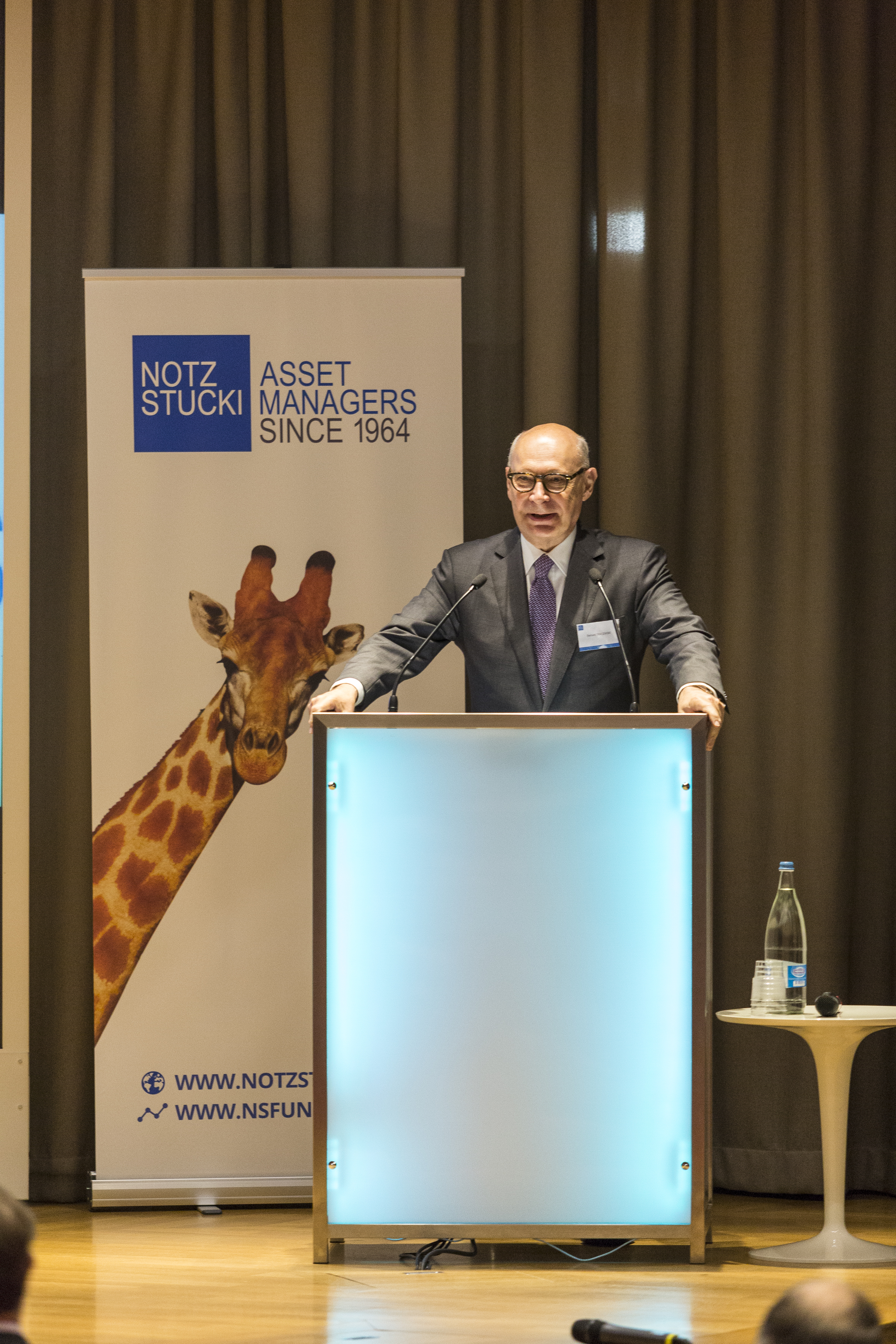
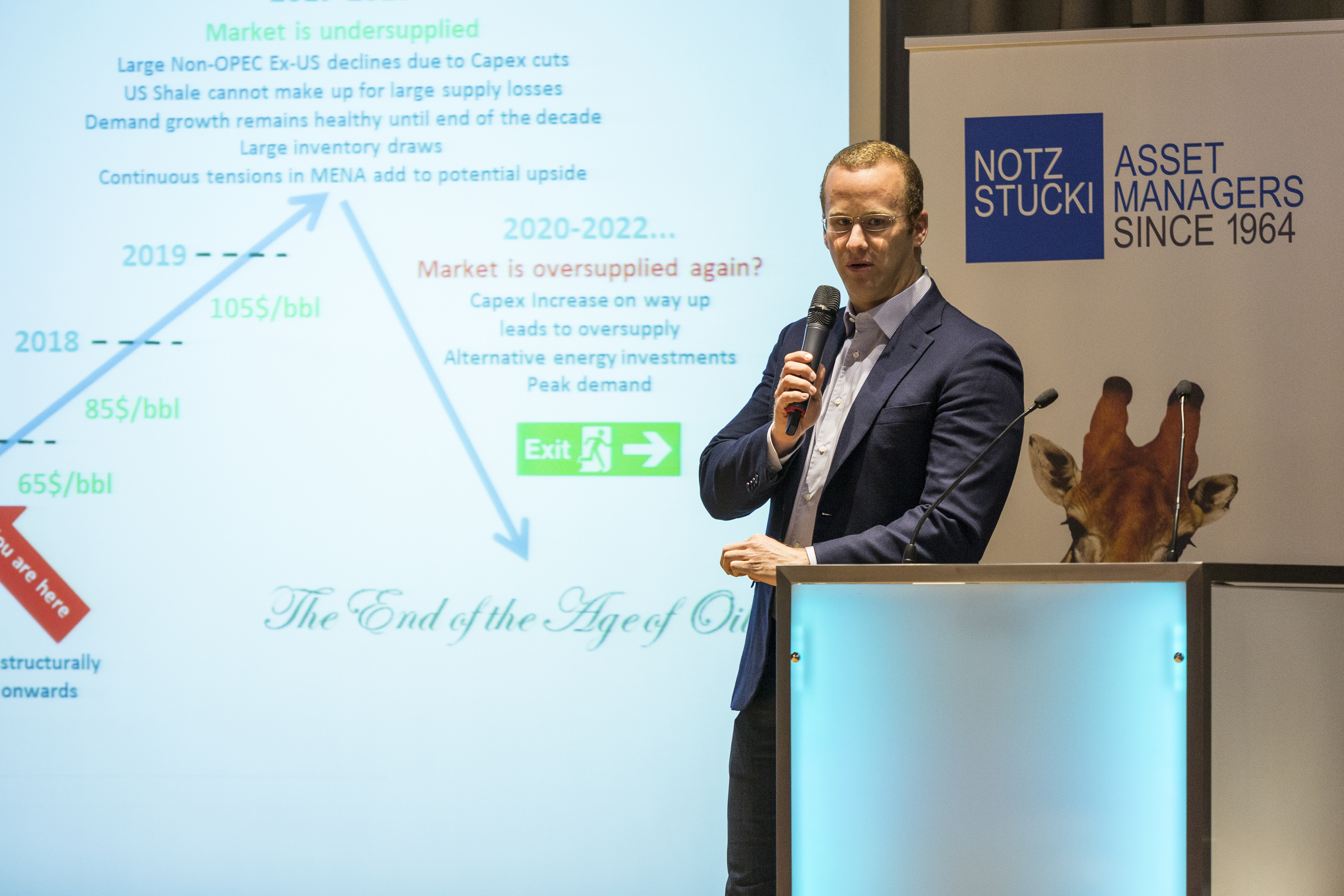
Welcome word by Bernard TracewskiIntroduction by James MacphersonRonald Chan from Zeal Asset ManagementPierre Andurand from Andurand CapitalLeda Braga from Systematica InvestmentsGrégoire Dooms from Systematica InvestmentsLouis-Vincent Gave from GaveKalSummer bags offered to attendees!