Cloud e Cybersecurity: l’unione fa la forza
Cloud e Cybersecurity: l’unione fa la forza
Lo sviluppo della tecnologia e del mondo digitale ha reso urgente la necessità di protezione dagli attacchi informatici, soprattutto dopo le complicazioni insorte con la pandemia. Da un’analisi su base globale è emerso nel periodo 20-21 gli attacchi informatici sono infatti aumentati del +31%. Si ricordi, ad esempio, quando alcuni hacker avevano violato con un attacco ransomware Colonial Pipeline, ovvero il più grande oleodotto degli Stati Uniti, causando per una settimana l’interruzione di tutte le attività. Per il settore della Cybersecurity, dunque, continuiamo ad aspettarci opportunità interessanti e profittevoli per il futuro.
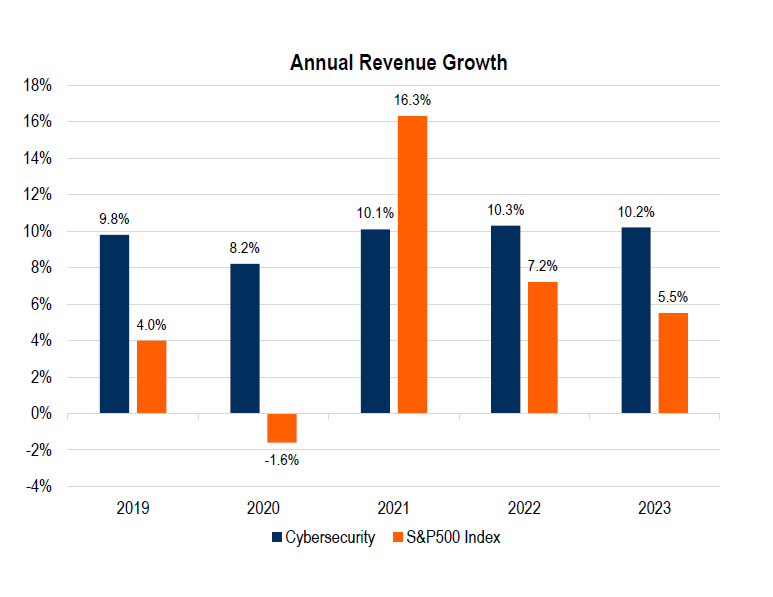
Si osservi il grafico rappresentato: esso pone a confronto la crescita annuale dei ricavi di tale settore con quello delle aziende appartenenti all’indice S&P 500. Una qualità che emerge è la stabilità: le aziende di sicurezza informatica sono state in grado di incrementare il fatturato anche nel 2020, ovvero l’anno della recessione pandemica, e secondo le proiezioni sia per il 2022 che per il 2023 i ricavi dovrebbero continuare a crescere più di quelli dello Standard & Poor’s. Infatti, i maggiori player in campo tecnologico si stanno muovendo per rafforzare il business della Cybersecurity. Ad esempio Microsoft nel 2021 ha generato circa $15 miliardi nella vendita di software per la sicurezza informatica e secondo alcune voci sarebbe in trattative per acquisire Mandiant. Quest’ultima di recente ha stretto una partnership con SentinelOne, ovvero un’altra società altamente specializzata nella Cybersecurity, con l’obiettivo di migliorare l’Incident Response, ovvero il processo strutturato per identificare gli incidenti di sicurezza informatica, contenerli ed eliminare le potenziali minacce. Tuttavia, al momento, l’azienda più rappresentativa è Cisco, che presenta una metrica finanziaria attraente per un potenziale investitore: si tratta della stima dei flussi di cassa cumulati nei prossimi 3 anni, che risulta pari a circa il 20% della capitalizzazione di mercato. Di recente il colosso tecnologico ha inoltre collaborato con la NFL (National Football League) per fornire soluzioni di sicurezza informatica in occasione dell’ultimo Super Bowl, che rappresenta l’evento sportivo e televisivo più importante negli Stati Uniti. Pertanto, riteniamo che anche i portafogli azionari debbano essere “rafforzati”: noi tra Quality Trends in cui investiamo abbiamo costruito un paniere di aziende unendo il tema del Cloud Computing con quello della Cybersecurity.
Fonti: NS Partners Research, Bloomberg, First Trust, Data Manager Online, cybersecurity360.it
Di seguito l’ultima nota settimanale del nostro ufficio di Milano.
Nota settimanale 18.02.2022
- Panoramica macro
- Cloud e Cybersecurity: l’unione fa la forza
- Discesa dei mercati: come impattano le valutazioni
Disclaimer
Le performance passate non sono in nessun caso indicative per i futuri risultati. Le opinioni, le strategie ed i prodotti finanziari descritti in questo documento possono non essere idonei per tutti gli investitori. I giudizi espressi sono valutazioni correnti relative solamente alla data che appare sul documento. Questo documento non costituisce in alcun modo una offerta o una sollecitazione all’investimento in nessuna giurisdizione in cui tale offerta e/o sollecitazione non sia autorizzata né per nessun individuo per cui sarebbe ritenuta illegale. Qualsiasi riferimento contenuto in questo documento a prodotti finanziari e/o emittenti è puramente a fini illustrativi, ed in nessun caso deve essere interpretato come una raccomandazione di acquisto o vendita di tali prodotti. I riferimenti a fondi di investimento contenuti nel presente documento sono relativi a fondi che possono non essere stati autorizzati dalla Finma e perciò possono non essere distribuibili in o dalla svizzera, ad eccezione di alcune precise categorie di investitori qualificati. Alcune delle entità facenti parte del gruppo NS Partners o i suoi clienti possono detenere una posizione negli strumenti finanziari o con gli emittenti discussi nel presente documento, o ancora agire come advisor per qualsiasi degli emittenti stessi. I riferimenti a mercati, indici, benchmark, cosi come a qualsiasi altra misura relativa alla performance di mercato su uno specifico periodo di riferimento, sono forniti esclusivamente a titolo informativo. Il contenuto di questo documento è diretto ai soli investitori professionali come definiti ai sensi della direttiva Mifid, quali banche, imprese di investimento, altri istituti finanziari autorizzati o regolamentati, imprese di assicurazione, organismi di investimento collettivo e società di gestione di tali fondi, i negoziatori per conto proprio di merci e strumenti derivati su merci, soggetti che svolgono esclusivamente la negoziazione per conto proprio su mercati di strumenti finanziari e che aderiscono indirettamente al servizio di liquidazione, nonché al sistema di compensazione e garanzia; altri investitori istituzionali, agenti di cambio e non è da intendersi per l’uso di investitori al dettaglio. Accettando questi termini e condizioni, l’utilizzatore conferma e comprende che sta agendo come investitore professionale o suo rappresentante e non come investitore al dettaglio. Informazioni aggiuntive disponibili su richiesta
© NS Partners Group