Investing in picks and shovels

Investing in picks and shovels

The 1848-1855 California Gold Rush attracted thousands of fortune seekers. While some found a few nuggets, many went away empty-handed, having lost a lot of money. However, pickaxe and shovel sellers did pretty well out of those caught up in the gold fever. Although this was a less enticing prospect than discovering a vein of gold, these traders made big profits.

Merchants do better than prospectors

Today we are in the midst of a 30-year transition towards decarbonising our economy, which makes “transition metals” look like a particularly attractive investment opportunity – as the sellers of picks and shovels of yesteryear did. Indeed, current investors are on the hunt for gold. i.e. the future market leaders in electric vehicles, battery manufacturing, wind energy, public electricity utilities or solar panels. But what all these sectors have in common is a huge need for transition metals, which could provide the real big wins of the move to decarbonisation.

Metals vital to the transition

One such essential metal is lithium, which is used in laptop batteries, smartphones and electric vehicles, as well as energy storage. Lithium is found in mines and in brine deposits and lithium-rich salts. Rare earth elements, such as neodymium, dysprosium and praseodymium, are used to make the permanent magnets needed for EVs and wind turbines. They can be found in small amounts all over the world, but China is the country that is most active in mining and refining them. Several companies based in North America and Australia are also major suppliers. Uranium, meanwhile, is increasingly being used as a replacement fuel for coal, fuel oil and natural gas in nuclear power plants. A number of the biggest uranium suppliers are in Canada. Copper will directly benefit from the increasing electrification, as it is needed for enhancing the electricity grid, wiring EVs and connecting wind turbines to the grid.

China plays an important role in refining and supplying these transition metals, but bedfore rushing in, investors must take into account the risks attached to investing in a country without fully reliable legal and economic structures. Countries with less government intervention and a more stable legal system are likely to be a better bet.

The recently passed US Inflation Reduction Act, which supports clean energy financing, as well as forthcoming EU regulations promoting the adoption of cleaner energy technologies, will increase demand for transition metals. As a result, investing in the ‘picks and shovels’ of the energy transition – which should continue over the next 30 years – may be the way to go.


Article published in Le Temps, 6 February, 2023

Investir dans les pelles et le pioches
 

Notz Stucki Investment Meeting – Pierre Gave

Is the worst of the global slowdown behind us?

In 2018 there was no place to hide in financial markets, but in the first quarter of this year a much better environment took hold. The turnaround is surprising in some ways. The fundamentals of most economies have not changed much. Growth has been slowing everywhere, but this was not unexpected. Given the length of the expansion, now a record 37 quarters in the US, a slowdown was inevitable. But for financial markets liquidity was the critical factor. After 10 years of central banks adding liquidity to the system, this reversed last year led by the US and China. Markets foundered, but when the Fed made a complete reversal of policy in January, and China announced a new stimulus package, the market rallied hard. The market reaction suggests they have repriced growth, but that growth has not come through yet. If there is one message that investors should take away it is that when the world’s monetary base contracts trouble follows.

While liquidity conditions remain benign it will still require fundamentals to do well for asset prices to rise from here. The outlook for the US economy is still positive, but the growth is more moderate than before. Two areas look likely to do well are the consumer and housing. Mortgage activity and construction should pick up, as affordability is good. A further positive is inflation is not a problem. There is some wage inflation, but it is modest. Globalisation and automation/robotics remain powerful forces on labour’s ability to bargain. A boost to the stock market could come from the dollar falling. On a PPP basis the dollar is expensive, but it enjoys a yield premium and the relative strength of the US economy. The principal concern in the US is debt. The US government deficit is projected to reach $1.4 trillion this year. Corporate debt has ballooned and much of it has been deployed in financial engineering, not invested in productive assets. For example in Q4 2018 there was a record $225 billion of share buy backs. But total US leverage is not so bad because household leverage has declined.

Europe is much more vulnerable to world trade and global growth declining. If President Trump introduces tariffs on the auto sector this would be significant. For Germany in particular the auto sector is an important part of the economy. Car production already faces a weak environment as it is in the middle of a big technological shift, and sales  in China slow as capacity has been reached, and demand there now enters a replacement cycle phase. Europe’s domestic demand remains sluggish, and this is being worsened by the recent rise in oil prices. The ECB are at the limits of what they can do with monetary policy. In theory Europe should undertake a fiscal stimulus, but it is constrained by fiscal rules on this. Indeed the German Finance minister has just said that weak growth limits the ability to make fiscal packages. If Germany slips into recession then this thinking may start to change. To reinvigorate Europe probably requires massive fiscal stimulus by a tax cut and infrastructure packages. For now there is little appetite for this.

China has also slowed, but it should pick up in the second half. China’s slowdown is different from its previous ones which centred on its industrial economy. This time the slow down relates more to the consumer credit. The export numbers have also fallen, but this may be due to buyers building inventory ahead of US tariff imposition. Nonetheless China is ramping up stimulus and the results should be seen in the second half. It will mean that leverage will rise again in China, which may become a problem in the future, but is not a concern for now. A recovery in China will help the emerging markets where investors are massively underweight, but they are unlikely to rebalance until the dollar weakens.

There is a calmer mood in the market compared to the end of last year. It has been created by the Fed stepping back from raising rates, China’s stimulus, and a brighter outlook on the US-China trade talks. Against that must be weighed the fact that global growth is slowing, Europe is on the brink of recession and US government borrowing is far too high for this stage of the cycle. A big unknown swing factor is the oil price which has been rising recently. If this continues it could upset the better sentiment. But the combination of the world’s two major economies looking set for steady growth this year, and no sign of inflation, provides a good background for equities.

Please click here to download the investment policy notes.

Investment Outlook Q2 2017

Notz Stucki has just released its investment outlook for the second quarter of 2017.

The first quarter was considerably calmer than that of 2016. On the political front the Dutch election was won by the sitting Prime Minister, which marked a break of a string of losses by incumbents in recent major elections. With predictions for the French election pointing to M. Macron as the likely winner the rise of the extremist parties in Europe seems to have been halted for the time being. In the US President Trump took office.

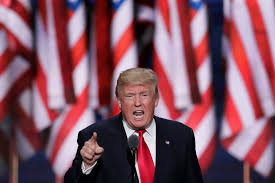
trump speech

Trump’s election on the pledge that he would throttle the State (‘drain the swamp’) was an attractive pitch, and brought the voice of the middle states to the elitist coast. However by the end of the quarter the complexity of getting anything done in Washington was starting to restrain him, as his first major legislative test to overturn Obamacare failed. That said business confidence has perked up following Trump’s election, partly due to the hope of tax cuts, but also to a revival of energy in middle class entrepreneurs.


Please click here to download the entire document.