The power of luxury: growth and resilience
The power of luxury: growth and resilience
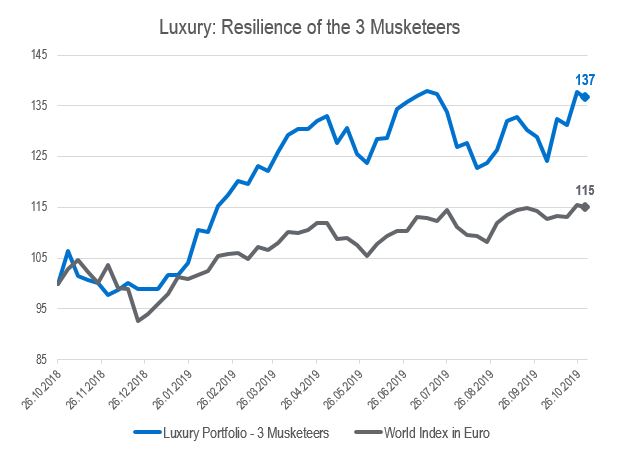
Despite the current economic downturn, the luxury sector is resilient and continues to grow, while maintaining high margins.
In the current global landscape, luxury companies have established themselves as attractive and strategic investments. In the context of major challenges, the sector is emerging as a bastion of economic stability and a status symbol. Luxury giants such as Hermès and LVMH, iconic companies such as Prada and little gems such as Jungfraubahn are examples that not only embody luxury and exclusivity, but also offer solid financial opportunities.
Indeed, despite global economic fluctuations, the luxury sector has demonstrated a remarkable capacity for resilience and financial stability. Indeed, even in times of economic downturn, these companies often retain their value thanks to the loyalty of their wealthy customers. A case in point is Hermès, which has maintained steady growth over the years, even during recessions, thanks to the exclusivity of its products. In terms of performance, the company has even outperformed technology giants such as Meta and Alphabet, while exhibiting lower volatility.
A WELL-DIVERSIFIED SECTOR
Another great advantage that characterises most of the players in this industry is their diversified portfolio, which covers different brands and market segments, ranging from fashion and accessories to hotels and high-end drinks. LVMH is an excellent example of this diversification, with over 70 brands under its umbrella, including legendary names such as Louis Vuitton, Dior and Moët & Chandon. This strategy not only mitigates risk, but also facilitates geographic expansion by taking advantage of growth in emerging markets.
INNOVATING WHILE REMAINING TRUE TO THEIR HERITAGE
These companies also stand out for their ability to innovate while preserving their heritage and maintaining very high barriers to entry. Prada, for example, is renowned for its emphasis on innovation in design and materials, combining traditional Italian craftsmanship with modern technology. This fusion of innovation and tradition gives rise to unique products that appeal to demanding and loyal consumers, guaranteeing a steady stream of income and keeping the circle closed to just a few exclusive brands.
STRONG PRICING POWER
Finally, another attractive feature of luxury companies is their exceptional brand positioning, which enables them to set high prices, with margins far higher than those of their less exclusive competitors. This recognition is the result of decades of investment in quality, design and refined marketing strategies. Jungfraubahn, known for its exclusive destinations in the Swiss Alps, has established itself as an icon of luxury mountain tourism, attracting a global clientele in search of unique and unrivalled experiences.
Investing in luxury companies such as those mentioned above guarantees solid financial stability and effective diversification, thanks in part to their intangible value through prestige and exclusivity. Indeed, these companies not only market products, they also offer experiences and an ambitious lifestyle that continues to be sought after worldwide, particularly by the younger generation. For these reasons, acquiring luxury companies can be a strategic and profitable long-term decision.