L’Opec+ riduce la produzione del petrolio

L’Opec+ riduce la produzione del petrolio

L’Opec+ ha annunciato che ridurrà la produzione del petrolio di 1 milione di barili al giorno a partire da maggio, dopo averla già diminuita di 2 milioni a ottobre. È importante ricordare che, anche in precedenza, l’organizzazione spesso non raggiungeva i propri obiettivi di produzione. La decisione è stata accolta con sorpresa a livello globale, dato che vari paesi membri avevano annunciato pubblicamente che non avrebbero ridotto l’offerta, almeno fino al termine del 2023. Di conseguenza, sia i prezzi del petrolio attuali (grafico sotto rappresentato) che le previsioni di essi per dicembre, sono aumentati. Le stime per i prezzi alla fine dell’anno sono state alzate persino a $100 al barile.

L’aumento dei tassi di interesse da parte delle Banche Centrali per ridurre l’inflazione, insieme alle vicissitudini di alcuni istituti bancari che abbiamo osservato a marzo, hanno riacceso i timori di una recessione. Durante le recessioni scendono la domanda e i prezzi del petrolio. Di conseguenza, la scelta dell’Opec+ può essere interpretata come una mossa preventiva, resa possibile dall’ampio potere dell’organizzazione di influenzare i prezzi. La decisione è stata presa nonostante certi analisti pensassero che il calo dei prezzi del petrolio causato da questo contesto di incertezza fosse temporaneo, e che la domanda sarebbe nuovamente aumentata nella seconda metà del 2023 a causa della riapertura della Cina. Pertanto, è possibile che la riduzione dell’offerta sia stata un atto diretto agli Stati Uniti, date le tensioni tra Biden, l’Arabia Saudita e i membri sotto la sfera d’influenza di quest’ultima. All’inizio della guerra in Ucraina, Biden aveva ordinato un rilascio straordinario di petrolio dalle riserve americane, abbassando i prezzi e innervosendo l’Opec+.  Lunedì, l’annuncio dell’organizzazione ha causato un rialzo nelle azioni del settore energetico. Ad esempio, Shell è salita del 4,21% e TotalEnergies del 4,56%. I rendimenti dei titoli di Stato americani, particolarmente quelli con scadenza a due anni, sono saliti dopo l’annuncio. La riduzione dell’offerta causerà uno sbilancio tra consumo e produzione. Per soddisfare la necessità di petrolio, verranno ridotte le scorte, conseguentemente alzando i prezzi, i quali contribuiscono all’inflazione e rischiano di annullare gli sforzi delle Banche Centrali. Infatti, negli Stati Uniti, le aspettative di un rialzo dei tassi di interesse da parte della Federal Reserve, che erano scese dopo la crisi delle banche regionali e il crollo di Silicon Valley Bank, sono nuovamente aumentate dal 55% al 65%. In un momento in cui le Banche Centrali si trovano in difficoltà tra bilanciare l’inflazione ed evitare una recessione, la decisione della Opec+ ha certamente creato maggiore incertezza.

Fonti: Bloomberg, CNN, Wall Street Journal, The New York Times

Di seguito l’ultima nota settimanale del nostro ufficio di Milano.

Nota settimanale 07.04.2023

  1. Panoramica macro
  2. L’Opec+ riduce la produzione del petrolio
  3. Il futuro dell’industria sanitaria e del medtech


Disclaimer

Le performance passate non sono in nessun caso indicative per i futuri risultati. Le opinioni, le strategie ed i prodotti finanziari descritti in questo documento possono non essere idonei per tutti gli investitori. I giudizi espressi sono valutazioni correnti relative solamente alla data che appare sul documento. Questo documento non costituisce in alcun modo una offerta o una sollecitazione all’investimento in nessuna giurisdizione in cui tale offerta e/o sollecitazione non sia autorizzata né per nessun individuo per cui sarebbe ritenuta illegale. Qualsiasi riferimento contenuto in questo documento a prodotti finanziari e/o emittenti è puramente a fini illustrativi, ed in nessun caso deve essere interpretato come una raccomandazione di acquisto o vendita di tali prodotti. I riferimenti a fondi di investimento contenuti nel presente documento sono relativi a fondi che possono non essere stati autorizzati dalla Finma e perciò possono non essere distribuibili in o dalla svizzera, ad eccezione di alcune precise categorie di investitori qualificati. Alcune delle entità facenti parte del gruppo NS Partners o i suoi clienti possono detenere una posizione negli strumenti finanziari o con gli emittenti discussi nel presente documento, o ancora agire come advisor per qualsiasi degli emittenti stessi. I riferimenti a mercati, indici, benchmark, cosi come a qualsiasi altra misura relativa alla performance di mercato su uno specifico periodo di riferimento, sono forniti esclusivamente a titolo informativo.  Il contenuto di questo documento è diretto ai soli investitori professionali come definiti ai sensi della direttiva Mifid, quali banche, imprese di investimento, altri istituti finanziari autorizzati o regolamentati, imprese di assicurazione, organismi di investimento collettivo e società di gestione di tali fondi, i negoziatori per conto proprio di merci e strumenti derivati su merci, soggetti che svolgono esclusivamente la negoziazione per conto proprio su mercati di strumenti finanziari e che aderiscono indirettamente al servizio di liquidazione, nonché al sistema di compensazione e garanzia; altri investitori istituzionali, agenti di cambio e non è da intendersi per l’uso di investitori al dettaglio. Accettando questi termini e condizioni, l’utilizzatore conferma e comprende che sta agendo come investitore professionale o suo rappresentante e non come investitore al dettaglio. Informazioni aggiuntive disponibili su richiesta

© NS Partners Group
Le graphique du mois – Technologies médicales: pour la santé de votre portefeuille

Technologies médicales: pour la santé de votre portefeuille

Source: Bloomberg, Notz Stucki

Vous souvenez-vous des paroles de Grandmaster Flash and the Furious Five dans «The Message» en 1982? «Ils ont poussé cette fille en dessous du train, l’ont amenée au docteur, recousu son bras, poignardé cet homme en plein dans son cœur, puis l’ont transplanté pour tout recommencer». L’objectif de la chanson était bien sûr tout autre, mais Grandmaster Flash évoquait déjà les technologies médicales et la réparation de ce qui semble irréparable dans le corps humain.

Parmi les domaines dans lesquels les entreprises de technologie médicale exercent leurs activités, on peut citer les stents, les valves cardiaques, les stimulateurs cardiaques, les prothèses auditives, les prothèses de hanche, de genou et d’épaule, la chirurgie robotique, les soins oculaires et dentaires, ainsi que les diagnostics, les analyses et les fournitures médicales en général.

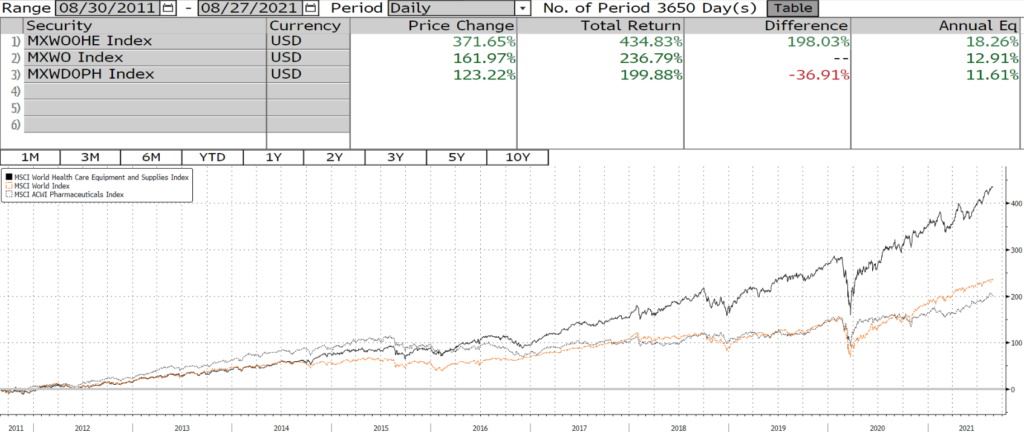
Comme illustré dans le graphique, le secteur a enregistré des performances exceptionnelles au cours des dix dernières années, surperformant les indices MSCI World et MSCI World Pharmaceutical de plus de 5,3% et 6,5% respectivement sur une base annualisée.

Cette surperformance s’explique par de nombreux facteurs: du côté de la demande pure, l’un des moteurs manifestes des technologies médicales est le vieillissement de la population, car, dans une certaine mesure, les personnes âgées ont besoin de presque toutes les solutions qu’offre le secteur pour vivre aussi agréablement et aussi longtemps que possible. Ensuite, côté utilisateurs (chirurgiens, dentistes et autres médecins), ces équipements et fournitures engendrent généralement un niveau élevé de fidélisation: ce sont, bien souvent, des produits essentiels dont les praticiens sont peu enclins à se détourner tant qu’ils donnent satisfaction. Par ailleurs, sur le plan réglementaire, les technologies médicales sont moins vulnérables à l’expiration des brevets (bien qu’elles y soient exposées).

L’offre pourrait toutefois être en passe de prendre une importance prépondérante. En effet, les avancées et percées technologiques sont, à tous points de vue, stupéfiantes, la technologie étant notamment très présente par le biais de la miniaturisation et de la numérisation. La médecine progresse énormément sur le plan des traitements, lesquels s’appuient souvent sur les innovations formidables proposées par les technologies médicales.

Après une telle reprise du sous-secteur, une certaine méfiance peut être compréhensible. Pour autant, il semble évident que nous sommes loin d’avoir atteint les limites de ce que peuvent offrir les technologies médicales en matière d’amélioration de la santé, et si, en tant qu’individu, on ne peut que souhaiter la poursuite, pour notre santé, des progrès des technologies médicales, en tant qu’investisseur, il est quasi certain que les technologies médicales seront propices à la santé de notre portefeuille.


Les performances passées ne garantissent pas les résultats futurs. Les opinions, stratégies et instruments financiers décrits dans le présent document peuvent ne pas convenir à tous les investisseurs. Les opinions énoncées sont celles valables à la date de publication de ce document. Toute référence aux indices de marches ou composites, indices de référence, ou autres mesures de performance relative des marches a une certaine période sont indiquées à titre d’information. Notz Stucki ne donne aucune garantie et n’est aucunement responsable de l’exactitude et de l’exhaustivité de l’ensemble des informations (données financières de marche, cours de bourse, avis de recherche ou description de tout autre instrument financier) contenus dans ce document. Le présent document n’est pas destiné aux personnes ou entités qui seraient citoyennes ou résidentes d’un lieu, état, pays ou juridiction dans lesquels sa distribution, sa publication, sa mise à disposition ou son utilisation seraient contraires aux lois ou règlements en vigueur. Les informations et données fournies dans le présent document sont communiquées à titre indicatif uniquement et ne constituent ni une offre, ni une incitation à acheter, vendre ou souscrire a des titres ou tout autre instrument financier. Il est fait référence dans ce document a des fonds d’investissement qui n’ont pas été enregistrés auprès de la Finma et ne peuvent donc pas être distribues en ou depuis la suisse sauf à certaines catégories d’investisseurs éligibles. Certaines des sociétés du groupe Notz Stucki ou ses clients peuvent être détenteurs d’une position dans les instruments financiers de l’un des émetteurs mentionnes dans ce document, ou agir en tant que consultant pour l’un d’eux. Des informations supplémentaires sont disponibles sur demande.

© Groupe Notz Stucki

Chart of the Month – Medical technology: it’s good for your wealth.

Medical technology: it’s good for your wealth.

Source: Bloomberg, Notz Stucki

Remember Grand Master Flash and the Furious Five’s lyrics in “The Message” in 1982? They pushed that girl in front of the train, took her to the doctor, sewed the arm on again, stabbed that man right in his heart, gave him a transplant for a brand-new start …. Well although it was certainly not the purpose of “The Message”, Grand Master Flash was already talking about Medical Technology: repairing what seems unrepairable in the human body.

Stents, cardiac valves, pacemakers, hearing aids, hip/knee/shoulder replacement, robotic surgery, eye and dental care, added to diagnostics, analysis and general medical supplies: these are the domains where Medical Technology companies sell their products and services.

The sector, as shown in the chart, has been an exceptional performer during the last 10 years, outperforming the MSCI World and the MSCI World Pharmaceutical Index by more than 5.3% and 6.5% respectively on an annualized basis.

Many factors explain this wide outperformance: on the pure demand side, one of the obvious drivers for Medtech is ageing population, as, to some extent, elderly need almost all the solutions provided by the sector in order to live as pleasantly as possible, as long as possible. Also, on the user side (read surgeons, dentists and doctors in general), these equipment and supplies tend to attract very strong customer loyalty: in most cases these are critical products which practitioners will be reluctant to move away from if they give satisfaction. Also, on the regulatory side, Medtech is less (but not immune) vulnerable to patent expiration.

But, perhaps, the offer side is becoming a leading force: technological advances and breakthroughs are stunning by all standards. This is where technology comes into mind, with miniaturization and digitalization in particular. Medicine is doing a lot of progress in terms of treatments, which is often supported by the immense innovations offered by Medical Technology.

Raising eyebrows after such a rally for the subsector is understandable. But at the same time, it seems clear that we’re far from seeing the nadir of what Medical Technology is able to deliver in terms of health-enhancing solutions. As a person, you want Medtech to keep on doing good for your health; as an investor, it is highly probable that Medtech will be good for your wealth.


Past performance is not indicative of future results. The views, strategies and financial instruments described in this document may not be suitable for all investors. Opinions expressed are current opinions as of date(s) appearing in this material only.

References to market or composite indices, benchmarks or other measures of relative market performance over a specified period of time are provided for your information only. Notz, Stucki provides no warranty and makes no representation of any kind whatsoever regarding the accuracy and completeness of any data, including financial market data, quotes, research notes or other financial instrument referred to in this document.

This document does not constitute an offer or solicitation to any person in any jurisdiction in which such offer or solicitation is not authorized or to any person to whom it would be unlawful to make such offer or solicitation. Any reference in this document to specific securities and issuers are for illustrative purposes only, and should not be interpreted as recommendations to purchase or sell those securities. References in this document to investment funds that have not been registered with the FINMA cannot be distributed in or from Switzerland except to certain categories of eligible investors. Some of the entities of the Notz Stucki Group or its clients may hold a position in the financial instruments of any issuer discussed herein, or act as advisor to any such issuer.

 Additional information is available on request.

© Notz Stucki Group

Chart of the Month – Equities: focus on sectors & themes

Equities: focus on sectors & themes

Source: Notz Stucki

In the early days of Notz Stucki, the country was an important factor to cherry pick the best companies for an equity portfolio. Capital markets were more isolated, trade flows were smaller, interest rates differed among countries, and some countries had specific political risks. As a consequence of that, the top-down investment process started with the country view and, after that, sector view and stock picking.

As the economies became more integrated from the trade point of view and from the capital market point of view, the country notion became less important. The birth of the euro for instance, changed the nature of equity investments and many investors started to consider the Eurozone or Europe as one region to invest, and not specific countries.

Time went by and when we look at the market today, we notice that sectors have become the dominant factor to explain performances:

  • US energy companies lost 37.6% in 2020 and European energy companies lost 37.2%.
  • Information Technology in the US gained 44.5% and the Asian IT companies gained 51%.
  • Companies linked to “cleaner energy” have performed very well regardless of their geographical exposure.

Why have sector/themes become a dominant factor rather than countries/regions?

  • Trade flows for goods have increased over the last decades.
  • Flow of services has increased over the last decades.
  • Capital markets are more integrated.
  • Big multinational companies are dominating the market so the domicile of the company may differ from the origin of its revenues. For instance, Roche (Swiss company) has 50% of its sales in the USA, 21% in Asia, and 22% in Europe.
  • The asset management industry has recently focused more and more on investment themes like Digitalisation, Circular economy, Health, Wellness, Water, Artificial Intelligence, Cloud, etc, and those investments are free to select companies from all the regions.

IMPLICATIONS FOR NOTZ STUCKI INVESTMENT PROCESS AND MARKET VIEWS

With this more explicit focus on sectors and themes, we have modified our recommendations accordingly, so we have the following expectations at the beginning of the year:

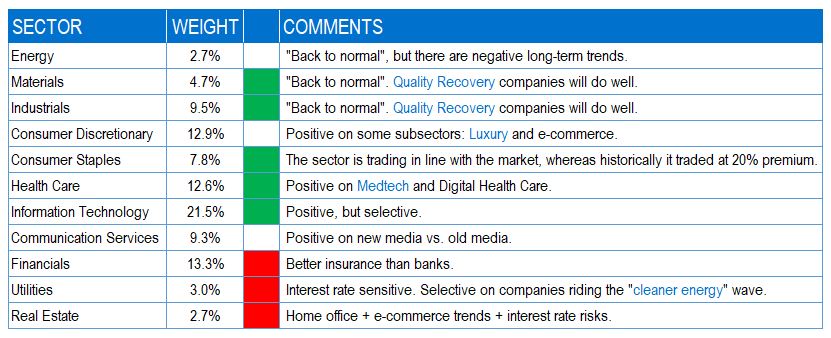
  • Positive view on Materials and Industrials to play the theme: “Back to normal”. With 3 vaccines already approved for emergency use, we expect the economies to recover by the 2H21, so we have this positive view on these cyclical sectors.
  • Positive view also on Consumer Staples, MedTech and Information Technology. They have attractive PEG ratios versus the world equity index, and they enjoy positive trends for the next decades.
  • We still hold a negative view on Financials, a sector that is negatively affected by low rates and that is being attacked by many new Fintech companies who would like to “eat” the profits of, specially, the banks.
  • We also like the theme of Cleaner Energy, a cross-sector theme that takes companies from Information Technology, Industrials, Utilities and Materials.

After the good rally in equities in 2019 and 2020, the focus on sectors and themes will help investors navigate a challenging period with demanding valuations in many companies.


Past performance is not indicative of future results. The views, strategies and financial instruments described in this document may not be suitable for all investors. Opinions expressed are current opinions as of date(s) appearing in this material only.

References to market or composite indices, benchmarks or other measures of relative market performance over a specified period of time are provided for your information only. Notz, Stucki provides no warranty and makes no representation of any kind whatsoever regarding the accuracy and completeness of any data, including financial market data, quotes, research notes or other financial instrument referred to in this document.

This document does not constitute an offer or solicitation to any person in any jurisdiction in which such offer or solicitation is not authorized or to any person to whom it would be unlawful to make such offer or solicitation. Any reference in this document to specific securities and issuers are for illustrative purposes only, and should not be interpreted as recommendations to purchase or sell those securities. References in this document to investment funds that have not been registered with the FINMA cannot be distributed in or from Switzerland except to certain categories of eligible investors. Some of the entities of the Notz Stucki Group or its clients may hold a position in the financial instruments of any issuer discussed herein, or act as advisor to any such issuer.

 Additional information is available on request.

© Notz Stucki Group